Spray Foam Insulation in Orange, CA
Energy-Saving Spray Foam Insulation for Orange, CA Homes — Licensed & Insured
Spray foam insulation is one of the most effective ways to air-seal and insulate a home in Orange, CA, where summers push attic temperatures above 140 °F and marine air from the coast drives moisture into wall cavities. Home Comfort Insulation, an insulation company serving Orange, California, installs both open-cell and closed-cell spray foam in attics, walls, crawl spaces, garages, and commercial buildings. If your biggest concern is the heat building up overhead, our guide to Spray foam attic insulation in Orange covers that application in detail. This page explains how spray foam works, where it performs best, what it costs to install, and when a professional application beats a DIY kit — so you can make a confident decision before you request your free estimate.
What is spray foam insulation and how does it work?
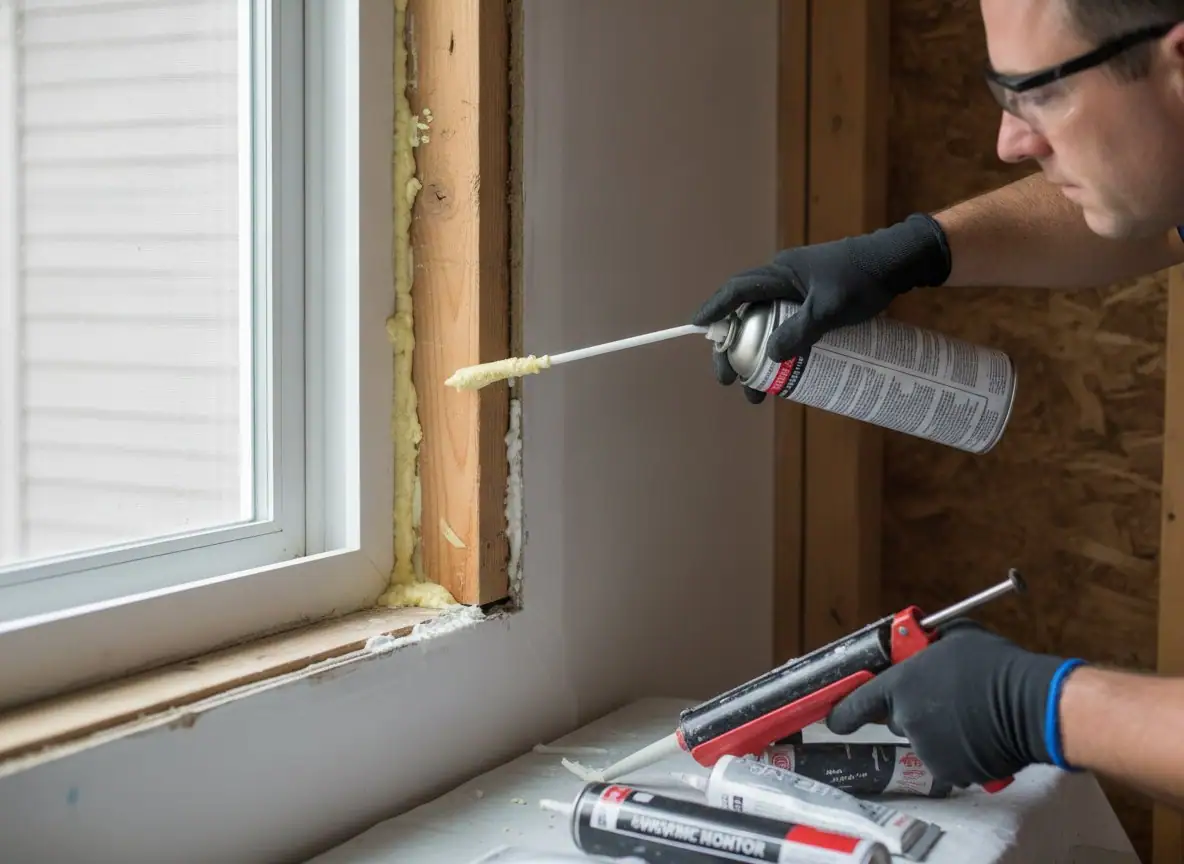
Spray foam insulation is a two-component liquid — typically a polyurethane or urethane-based system — that expands on contact to fill gaps, seal air leaks, and add thermal resistance in a single step. A trained technician combines an isocyanate (Part A) and a polyol resin (Part B) through a heated proportioning machine and a spray gun. The mixture expands 30 to 100 times its liquid volume within seconds, adhering to studs, rafters, concrete, and pipe surfaces. Because the foam bonds directly to the substrate, it creates a continuous air barrier that batt or blown-in products alone cannot match. That air-sealing function is especially valuable in older Orange-area homes built before modern energy codes, where unsealed top plates and rim joists account for a large share of heating and cooling losses. Understanding why spray foam outperforms other insulation types is the natural next question.
Why is spray foam insulation better?
Spray foam insulation delivers a higher effective R-value per inch than fiberglass batt or cellulose while simultaneously acting as an air barrier, vapor retarder, and structural stiffener. Competing insulation types add thermal resistance but leave air channels open; spray foam eliminates those channels at the point of application. In Orange, CA, where air conditioning runs most of the year, uncontrolled air infiltration is typically a larger energy drain than conductive heat loss through walls — which is exactly the problem spray foam solves. Closed-cell foam also adds measurable racking strength to wall assemblies, a practical benefit in a seismically active region. Beyond energy performance, the foam's rigid cell structure resists moisture accumulation, discouraging mold growth in crawl spaces and rim joist areas that see seasonal humidity swings. Knowing the exact R-value each foam type delivers helps you compare options and match the right product to each application.
Free, no-obligation estimates
Talk to Home Comfort Insulation
Tell us what you need and we’ll take it from there.
At a glance
Open-cell vs closed-cell spray foam: what are the R-values?
Open-cell and closed-cell spray foam are chemically similar but structurally different, and that difference determines their R-value, moisture behavior, and best application.
| Property | Open-Cell Foam | Closed-Cell Foam |
|---|---|---|
| R-value per inch | ~R-3.5 to R-3.8 | ~R-6.0 to R-7.0 |
| Cell structure | Broken, air-filled cells | Intact, gas-filled cells |
| Vapor permeability | Permeable (Class III vapor retarder) | Low permeance (Class II vapor retarder at ≥2 in) |
| Water resistance | Absorbs moisture; dries out | Resists liquid water intrusion |
| Relative cost tier | Lower | Higher |
| Best uses | Interior walls, interior attic decks, soundproofing, budget-conscious air sealing | Crawl spaces, rim joists, exterior walls, rooflines, below-grade areas |
Open-cell foam is a good fit for interior attic applications in Orange homes where the goal is primarily air sealing and modest R-value gain within standard rafter depths. Where liquid moisture or high humidity is a concern, closed cell spray foam is the preferred choice — crawl spaces beneath older Craftsman and ranch-style homes common in Orange are a prime example. California's Title 24 energy code sets minimum R-values for each climate zone; Orange falls in Climate Zone 8, where attic insulation requirements and wall-assembly minimums influence which foam thickness is necessary. Fire-rated and specialty injection options add another layer of choices worth understanding before you finalize a spec.
What are fire-rated and injection foam options?
Fire-rated spray foam contains intumescent additives or is covered with a thermal barrier — typically ½-inch drywall — to meet building-code ignition requirements; injection foam is a separate low-pressure product designed to be pumped into existing closed wall cavities without demolition. Standard polyurethane spray foam is combustible and must be covered with an approved thermal barrier wherever it is left exposed in occupied spaces, per California Building Code Section 2603. Fire-rated formulations delay ignition long enough to satisfy certain exposed-application requirements, such as attic mechanical rooms. Injection foam — sometimes marketed as "drill-and-fill" — uses a different, slower-expanding formula injected through small holes bored into the wall sheathing or interior drywall. This approach allows retrofit insulation of existing walls in Orange homes without a full gut renovation, making it a practical option when exterior siding or interior finishes are worth preserving. Both products require precise equipment calibration; under- or over-pressurized injection foam can bow drywall or leave voids. Knowing where foam is used in an Orange home clarifies which product and approach fits each location.
Where is spray foam used in Orange homes? (attics, walls, crawl spaces, garages)
In Orange, California, spray foam is most commonly applied in attics, exterior walls, crawl spaces, rim joists, and garages — each location with its own product and thickness requirements.
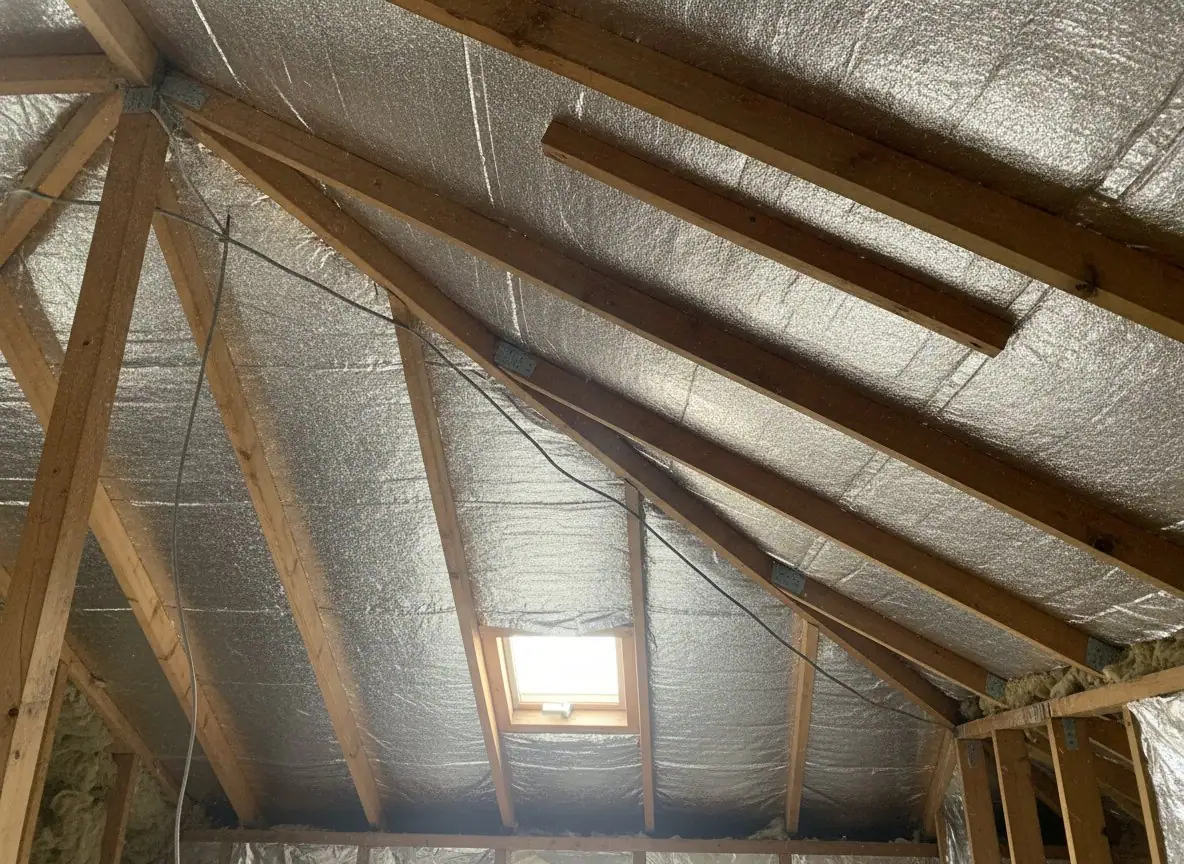
- Attics (roofline / rafters): Closed-cell or open-cell foam applied to the underside of roof sheathing creates a conditioned attic that keeps HVAC ducts within the building envelope, reducing duct losses in Orange's hot summers.
- Exterior walls: Closed-cell foam in a 2×4 or 2×6 wall cavity achieves higher R-values per inch than fiberglass batt, meeting or exceeding Title 24 requirements without requiring thicker framing.
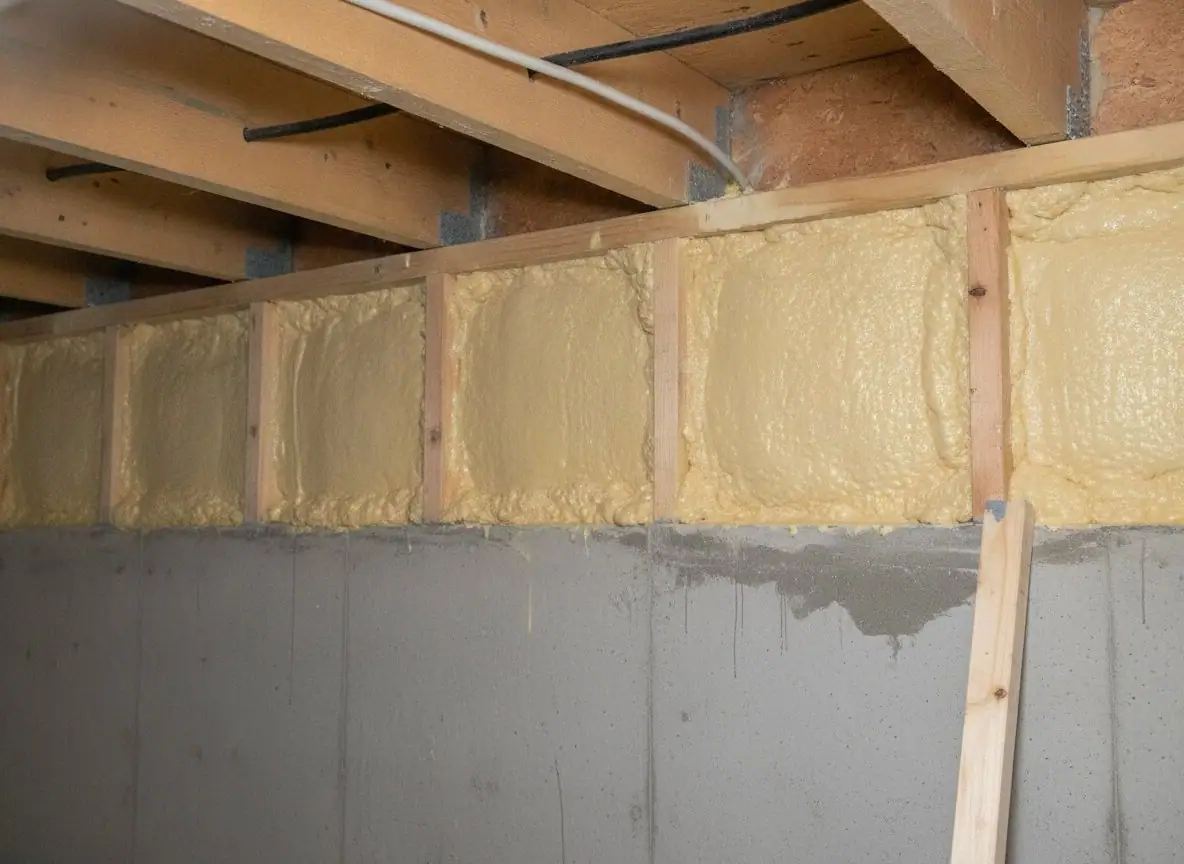
- Crawl spaces: Many mid-century homes in Orange have vented crawl spaces prone to moisture. Closed-cell foam on foundation walls and rim joists, combined with a vapor barrier, converts the space to a semi-conditioned zone and eliminates a common rodent-entry path.
- Rim joists: The band of framing at the floor perimeter is one of the highest-infiltration points in a slab-on-grade or raised-foundation home. A 2–3 inch closed-cell application seals it effectively.
- Garages: Garage walls and ceilings adjacent to living space benefit from both spray foam's thermal performance and its incidental soundproofing effect.
Read moreShow less
We also install spray foam for commercial buildings and can apply it to pipe and duct surfaces for thermal and condensation control. Before committing to any location, it's worth understanding what a homeowner can realistically accomplish with a DIY kit versus what requires professional equipment.
At a glance
What are some good DIY foam insulation kits available, and when is a pro needed?
DIY spray foam kits — including two-component polyurethane tank sets from brands sold at home-improvement stores — are genuinely useful for small air-sealing tasks but fall short of professional application in performance, safety, and coverage.
| Factor | DIY Aerosol / Small Kit | Professional Application |
|---|---|---|
| Typical coverage | Single cans: a few linear feet of gap sealing; two-component kits: 15–600 board feet depending on kit size | Thousands of board feet per job; continuous output |
| R-value achievable | Equivalent to pro foam per inch, but thickness control is difficult | Uniform thickness; consistent R-value across the area |
| Chemical exposure risk | High without proper PPE; isocyanates are respiratory sensitizers | Trained technicians use supplied-air respirators and full PPE |
| Temperature sensitivity | Canisters must be pre-warmed; cold substrates cause adhesion failure | Proportioner heats both components to spec regardless of ambient temp |
| Code compliance | Homeowner responsible for permits and thermal barrier requirements | Pro handles product data sheets, thermal barrier, and inspection coordination |
| Best use case | Sealing around pipes, small penetrations, single-stud bays | Whole-wall, roofline, crawl space, or garage insulation projects |
A practical decision rule: if the area to be insulated exceeds 100 board feet, involves a continuous surface like an attic deck, or sits in an occupied or partially enclosed space, professional application is safer and more cost-effective over the life of the installation. One common DIY product that generates frequent questions is aerosol can foam sealant.
Can I use Great Stuff to insulate walls?
Great Stuff and similar single-component aerosol sealants are designed for gap-filling and air sealing around penetrations — not for insulating wall cavities. A standard 12 oz can of Great Stuff fills roughly 25 linear feet of a ¼-inch gap; it cannot deliver consistent R-value across a 16-inch stud bay because the product over-expands unpredictably in open spaces, leaving voids and an uneven surface. Aerosol foam also lacks the structural adhesion and uniform density of two-component polyurethane foam. For small tasks — sealing around electrical boxes, plumbing penetrations, or the gap between a window frame and rough opening — aerosol sealants are fast and effective. For insulating a wall cavity, they are the wrong tool. This distinction also explains why homeowners sometimes end up removing foam that was applied incorrectly.
Why are people removing spray foam insulation?
Homeowners remove spray foam for four main reasons: improper installation, incompatibility with roof or wall warranty requirements, the need to access hidden structural defects, and off-ratio foam that remains tacky or emits odors long after application. Off-ratio foam — caused by an imbalance between the two components during mixing — never fully cures, can off-gas chemicals at elevated levels, and does not deliver rated R-values. Identifying off-ratio foam early requires a trained eye and, sometimes, chemical testing. Some roofing manufacturers also void their warranties if closed-cell foam is applied directly to the underside of decking without a specified air gap or barrier. We offer insulation removal and replacement as a dedicated service, and we can assess existing foam condition during a free inspection before recommending removal. Removal is labor-intensive and raises cost, so getting the original installation right matters — which makes spray foam insulation cost in Orange worth examining carefully.
At a glance
How much does spray foam cost in Orange, CA? (200 sq ft job and 20x20 garage)
Spray foam insulation cost depends on several project-specific variables; we provide a written quote after a free on-site inspection because no two jobs are identical.
| Cost Factor | Why It Matters |
|---|---|
| Foam type (open-cell vs closed-cell) | Closed-cell uses more material per board foot and specialized blowing agents, making it higher cost per inch |
| Project area and board footage | Larger jobs spread equipment setup costs over more square footage, often improving cost per sq ft |
| Required thickness | Achieving R-30 in an attic roofline requires more foam than a rim-joist air seal; each inch adds material cost |
| Access and site conditions | Low-pitch attics, tight crawl spaces, or second-story work slow application and affect labor time |
| Existing insulation removal | Old batt or blown-in material must often be removed before spray foam can adhere properly; disposal adds cost |
| Thermal barrier requirement | Code-required drywall or intumescent coating over exposed foam adds material and labor |
| Permits | Orange, CA building permits for insulation vary by scope; permit fees are project-specific |
| Repair or remediation needs | Mold, pest damage, or prior off-ratio foam may need to be addressed before new insulation is installed |
We offer financing options for homeowners who want to move forward without delaying the project. We also assist homeowners navigating insurance claims when insulation damage is part of a covered loss. Call us at (714) 909-2175 or use our free estimate form to schedule an on-site measurement — we will tell you exactly what a 200 sq ft application or a 20×20 garage project will require before any work begins. Choosing the right contractor shapes the outcome as much as the product itself, and that is the standard we hold ourselves to as an Orange insulation contractor Home Comfort.
How do you choose a spray foam insulation contractor in Orange?
The right spray foam insulation contractor in Orange demonstrates equipment capability, product knowledge, and clear documentation — not just a low bid. Spray foam quality depends heavily on machine calibration: component ratio, temperature, and pressure must stay within tight tolerances throughout the job. Ask any contractor to show you the technical data sheet for the specific product they intend to use, confirm they carry both general liability and workers' compensation insurance, and request a written scope that specifies foam type, target thickness, and thermal barrier plan.
- Verify the contractor pulls permits when the project scope requires them under Orange city building codes.
- Ask whether the crew uses supplied-air respirators — a minimum safety standard for two-component polyurethane application.
- Confirm post-installation inspection: a trained technician should check for pinholes, voids, and color uniformity (yellow or cream indicates proper cure; pink or purple tones may signal off-ratio mixing).
- Request a written quote, not a verbal estimate — it protects you if scope or product changes after the job starts.
Read moreShow less
Home Comfort Insulation is an insulation company serving Orange, California that has offered free inspections and written estimates since we opened, so homeowners can compare our scope and approach against any other quote before committing. We are available 24/7 for emergency service and serve homeowners and commercial clients throughout the Orange area. Call (714) 909-2175 or fill out our free estimate form to check availability and schedule your inspection.
FAQ
FAQ
Is spray foam safe to live around after installation?
Fully cured spray foam is inert and safe for occupants. The chemical hazard exists during and immediately after application, when isocyanates are airborne. Residents and pets should vacate the treated area for a minimum of 24 hours after application, or longer if the manufacturer's data sheet specifies it. After full cure — confirmed by hardness, lack of tackiness, and absence of odor — the foam poses no chemical exposure risk under normal living conditions.
How long does spray foam take to cure?
Spray foam reaches tack-free surface cure within minutes of application; it reaches full mechanical and chemical cure in 24 hours under typical Orange, CA temperature and humidity conditions. Unusually cold substrate temperatures (below 40 °F) or very high ambient humidity can extend cure time. Off-ratio foam that never fully cures is an installation defect, not a normal variation — if foam remains soft or tacky after 48 hours, it should be evaluated before it is covered.
Does spray foam insulation need a vapor or thermal barrier?
Open-cell spray foam requires a vapor retarder in some climate applications because it is moisture-permeable. Closed-cell foam at 2 inches or more acts as its own Class II vapor retarder. Both open-cell and closed-cell foam must be covered with an approved thermal barrier — typically ½-inch gypsum board — wherever they are exposed in occupied or accessible spaces, per California Building Code requirements. Some intumescent coatings are approved as an alternative to drywall in specific assemblies; your installer should confirm which applies to your project.
Can spray foam be installed over existing insulation?
Spray foam can be applied over existing fiberglass batt or blown-in cellulose in some configurations, but adhesion and performance suffer when the substrate is loose or contaminated. In attic roofline applications, existing insulation on the attic floor does not need to be removed if the foam is applied to the underside of the rafters above it. In wall cavities or crawl spaces where moisture damage, mold, or pest contamination is present, removal of existing material is typically required before spray foam application.
Does spray foam help with soundproofing?
Open-cell spray foam provides meaningful sound attenuation because its soft, porous structure absorbs airborne sound waves. It is not a complete soundproofing solution on its own, but it significantly reduces sound transmission through wall and ceiling assemblies compared to empty cavities or fiberglass batt alone. Closed-cell foam contributes less per inch to sound absorption due to its rigid cell structure, though it still outperforms no insulation. For projects in Orange where noise reduction is a primary goal, open cell spray foam is the starting point, and we also install dedicated soundproofing and acoustic insulation products.
Does spray foam affect roof warranties or home insurance?
Some roofing manufacturers specify in their warranty terms that applying any spray foam to the underside of decking without an approved air gap or separator voids the roofing warranty. Review your roofing warranty documentation before authorizing a roofline spray foam application. For home insurance, spray foam itself does not typically change policy terms, but insurers may request documentation of the installation and scope when a claim involves the insulated assembly. To see which products we install and how they differ, review our materials page. Home Comfort Insulation assists homeowners with insurance claims and can provide project documentation to support the claims process. If you are in Orange, CA and unsure how a planned spray foam project interacts with your existing warranties or policy, contact us at (714) 909-2175 and we will walk through the specifics with you.
Why choose us
Why choose Home Comfort Insulation?
Free estimates
Get a clear, no-obligation estimate before any work begins.
Licensed & insured
Your property and our crew are protected on every project.
Residential & commercial
One team for homes, multi-family and commercial properties.
Locally owned & operated
A local team serving your community and the surrounding area.
Get in touch
Find insulation help near you
Request a free estimate online or give us a call — our team will follow up quickly.
- Call us(714) 909-2175
- Visit1650 N Glassell St, Orange, CA 92867
- HoursMon-Sun 07:00-19:00